

In just a couple days, we’re going to find out whether Benny A will win Australia’s Local Hero Award… and acknowledging my bias in the matter, I think he bloody-well deserves the recognition, regardless of the result.
His work with and for R4R is unmatched, his growing influence in energy management is equally as impressive, and on the latter, he’s just written an article for his Blog
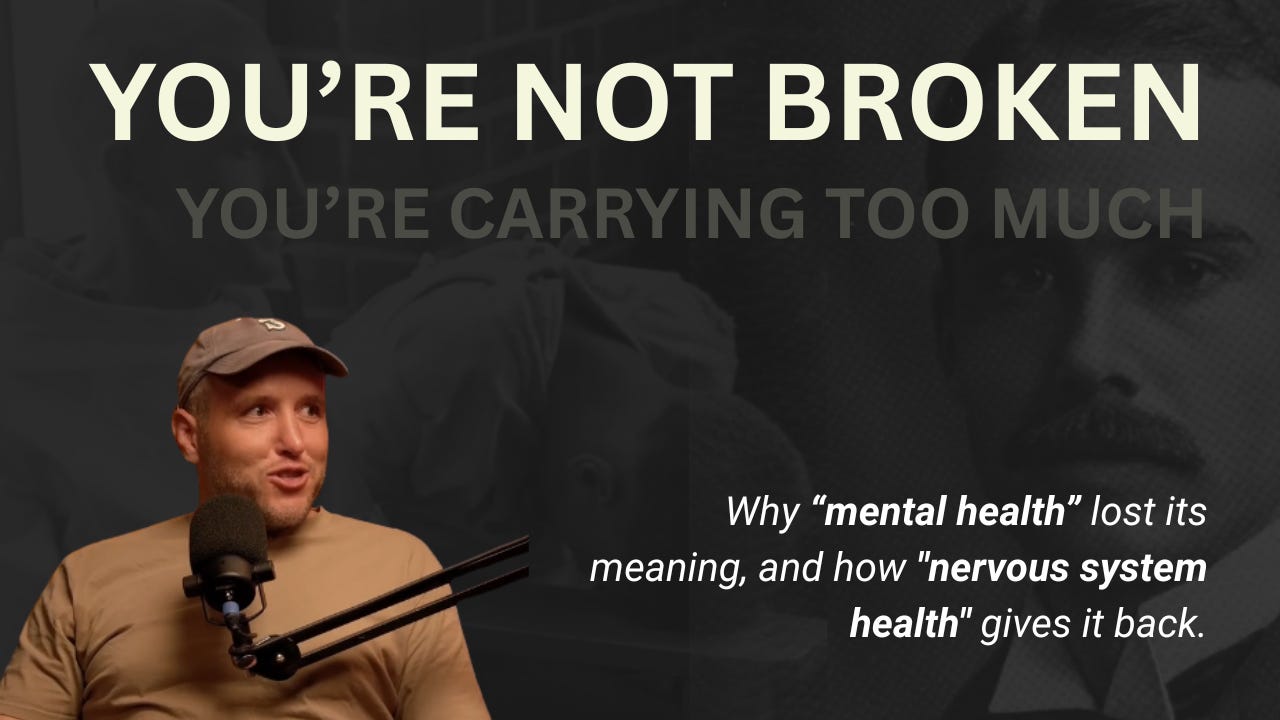
I think Benny’s article is a logical one, and I agree with what he’s saying… I think the way he frames nervous system health amidst the mental health landscape will help plenty of people, and like he says, particularly males.
Benny has always had a knack for locating the source of an issue or theme… almost to a point of frustration… like, surely you jumped to a conclusion here, Benny?…
Nope.
I think there are just some things Benny intuitively gets, and nervous system health and how it underpins energy and mental health, is one of them…
And when you combine that with the amount of work he puts into the topic, there’s no wonder why his voice seems to cut through the noise.
Benny’s commentary on reframing mental health as nervous system health, and more specifically with how it will benefit men made me pause…
Not because I disagree with it, but because it touched on a constant tension I have when thinking about pursuing a suicide-free Canberra.
Should we be focusing on our shared experience, or should we segment the problem into groups…
The logician in me says we should break the problem down into bigger bits, addressing them in step. Whereas the romantic in me says we should be looking at what connects everything together, and address that.
And while I’ve always been hesitant to put mental health into different categories, opting to focus on our shared experience, I think we can explore specifics in pursuit of the broad.
38 Canberran’s took their life in 2024.
Yes, each of these people had similarities in their struggles that can unite us, but each of these people had their own story.
Part of the reason I’ve been hesitant to draw lines around categories is because as soon as we start drawing lines, the picture can became awfully squiggly awfully quickly…
But, I think our community is mature enough to understand the nuance of pursuing different goals under the same mission.
Benny is pursuing a suicide-free Canberra in the way he knows how… which you can read about in his article, and we need more people like him.
So, if you have an article or perspective you’d like to share, please email hello@runningforresilience.com
You’re Not Broken. You’re Just Carrying Too Much.
Why “mental health” lost its meaning, and how “nervous system health” gives it back.
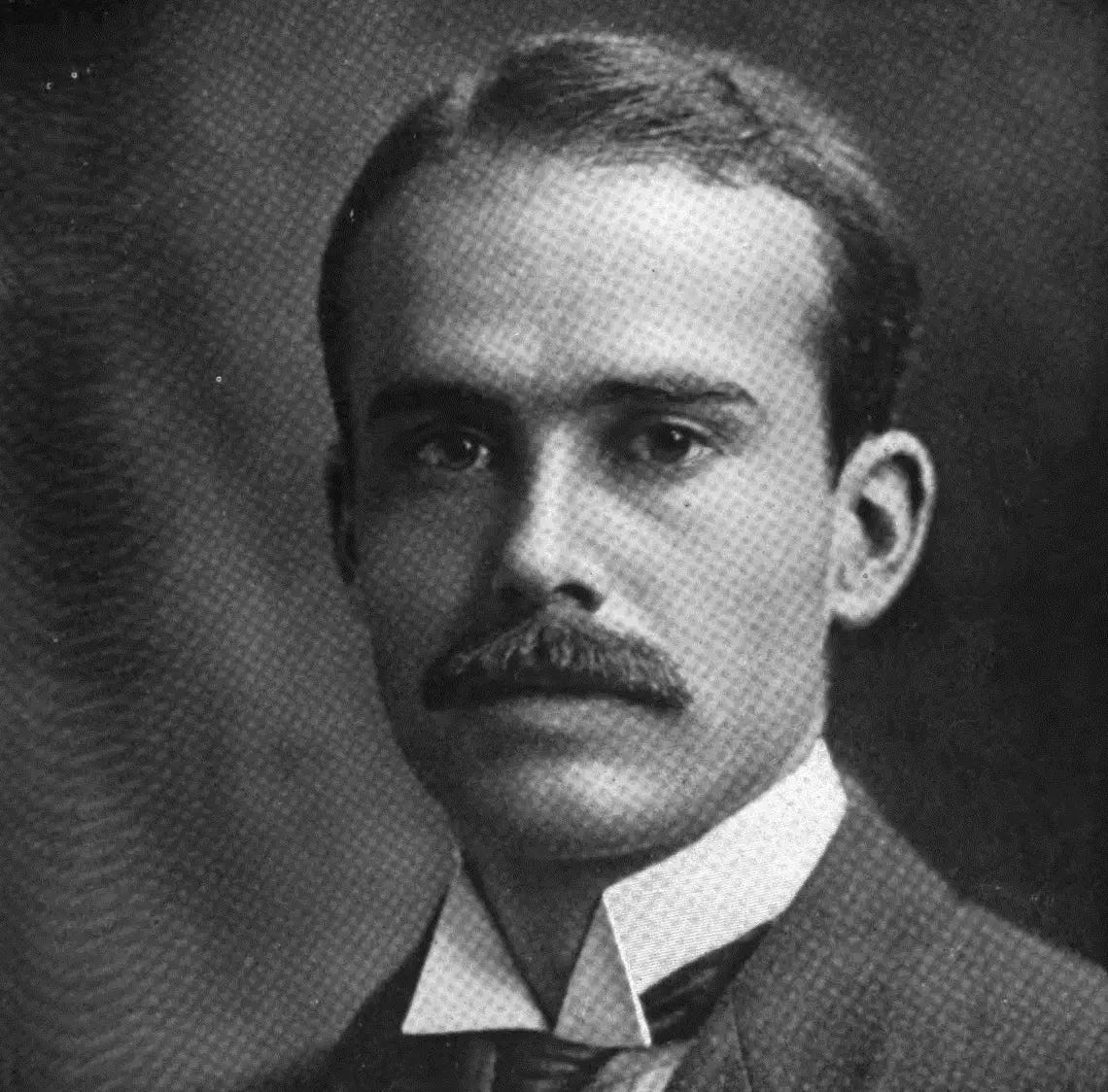
Meet Clifford Beers.
Cliff was born in 1876 and in his twenties, he attempted suicide.
He’d graduated from one of America’s top unis (Yale). But he broke down and was sent to a series of insane asylums.
Places where patients were beaten, isolated, and treated like animals.
But somehow, Cliff recovered and went on to write a book called A Mind That Found Itself. Which did two things that changed history:
It showed that someone who’d been labelled “insane” could return to a normal, productive life.
And it reframed breakdown not as moral failure or permanent defect, but as something that could happen to ordinary people under strain.
Cliff went on to found the “Mental Hygiene” movement, which got the US government’s attention and led to the creation of the National Committee for Mental Hygiene (now Mental Health America), which became the blueprint for today’s mental health organisations.
His goal was simple: treat people with dignity and help them earlier, before life fell apart.
But there was a limit to how far he could go.
Because the only language available was medical.
And that shaped everything that followed and how we speak about mental health today.
The term “Mental health” didn’t begin as a broad, human concept.
It emerged inside psychiatry and public safety systems, where people who were visibly “unwell” and need to be institutionalised.
Psychosis. Mania. Severe depression. People seen as unsafe to themselves and others.
So the phrase “mental health” lived in asylums, hospitals, courts.
It was about abnormality and the phrase carried an implicit line:
There are “normal people” and there are “mentally ill people”.
And most of society sat comfortably on either side of that fence.
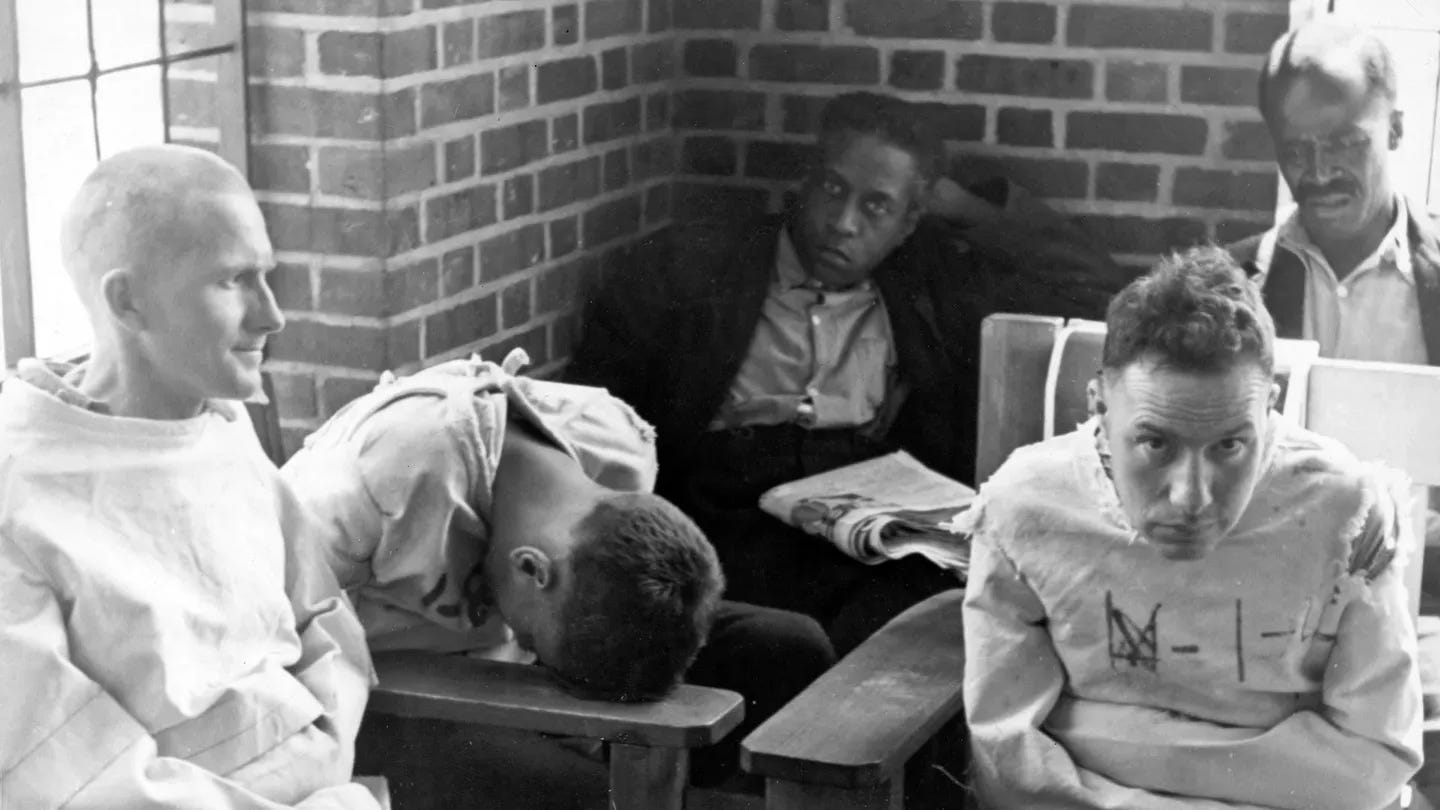
Then two things changed:
Asylums were shut down because they had become warehouses for people society didn’t know how to help, not places of healing.
We began to see that distress wasn’t rare or abnormal. It sat on a spectrum that included all of us.
Stress. Anxiety. Burnout. Trauma. Overwhelm. Grief. Loneliness. Panic.
These aren’t rare problems. They are common human states, and modern life is making them more common.
So “mental health” expanded, from a small group to almost everyone.
But the language has stayed the same. We’re still using a medical term built for acute disorders to describe everyday nervous system strain.
So now someone who is exhausted, over-stimulated, and under-supported is told they have a “mental health issue”.
Which subtly makes a normal response to pressure feel like a defect.
For me, the term “Mental health” felt vague and clinical, like I was broken and needed a degree just to understand what I was feeling.
But when I began to understand my experience through the lens of my nervous system, everything changed.
I was no longer broken. I was just overloaded. And that’s something I can control.
For years my nervous system had been stuck in high alert. Working heaps, putting tons of pressure on myself, and no recovery.
I stopped having fun. My sleep went. My patience with loved ones went. Plus my thinking narrowed and everything got heavier.
Not because my mind was faulty.
Because my nervous system was worn out.
And that reframe made things practical.
Instead of asking: “What’s wrong with me?” I could ask, “What is my nervous system dealing with?” which pointed me straight to action.
More rest, movement, structure and connection, with less noise, rush, and constant stimulation from screens.

But what helped me most was exercising with others at the same time each week, then grabbing a drink and chatting afterwards.
That simple rhythm gave my nervous system what it needed, and pulled me through some rough patches.
Which is why I give back to Running for Resilience , in the hope it can pull others through too.
If you’ve read this far, you might agree that most modern “mental health” problems are not broken minds. They are overloaded nervous systems.
Cliff opened the door from “dangerous lunatics” to “ordinary humans under pressure”.
A century later, the next step is to finish the job.
Especially for men.
Because when struggle is framed as illness, many men hear one thing: you are broken and weak.
So they stay silent, tough it out, and wait until they’re in crisis. That’s what I did.
This isn’t about defect or blame.
It’s about load and the skills to deal with that load.
Here’s the shift I’m arguing for:
“Mental health” now spans everything from everyday stress to acute psychiatric illness.
That breadth has power, but it also blurs the picture.
At the severe end of the spectrum, medical language still matters. Psychosis, bipolar, major depression. These are real and serious conditions that need clinical care.
But most people aren’t living at that end.
Most people are tired. Overloaded. Wired. And under‑recovered.
Using the same illness language for both ends of the spectrum makes ordinary human strain feel abnormal. It turns “load”into “defect”.
What we’re really talking about, for most people, is nervous system health.
How activated is your system? How much load is it carrying? How much recovery does it get?
This language does something simple and powerful.
It explains what’s happening.
And it gives people their power back.
You’re not broken.
You’re carrying too much.
And that means there are things you can change.
Just. Keep. Moving.